
Most people don’t decide they want to be a dentist at 12 years old. Even fewer decide, at that age, that they want to own their own practice someday.
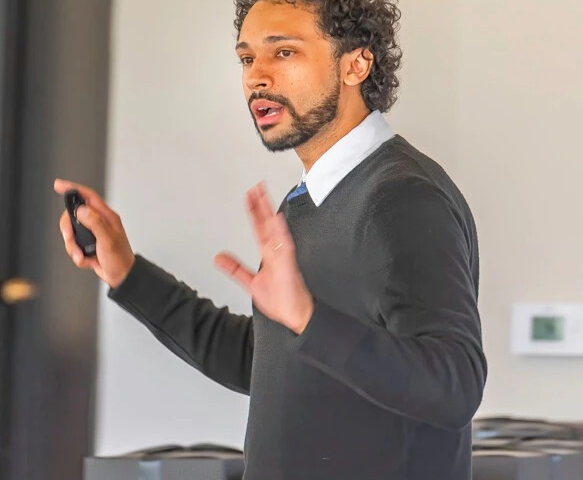
Dr. DeAngelo Webster did both.
Long before dental school, he pictured himself running his own office. The dentist who treated him growing up owned his practice, and that example stuck. By the time he reached dental school, ownership wasn’t a vague goal. It was the plan. What makes Dr. Webster’s story unusual is not just that he became a practice owner, but how early and how intentionally he did it.
Preparing for Ownership While Still in School
Dr. Webster attended the University of Michigan School of Dentistry. Early on, he realized he had more bandwidth than most of his classmates. After passing a cold, unannounced mock board exam during his first weeks of school, he knew he wasn’t going to need every free hour just to survive the curriculum.
So he used that time differently.
By his second year, he had already named his future practice, designed the logo, and purchased the domain. By year three, he had written a business plan and marketing plan. In his fourth year, he secured pre-approval for a startup loan and began building out a physical space for his future office.
Instead of graduating and then figuring out ownership later, he stepped into it almost immediately.
Opening a Practice Without Massive Debt
One of the most surprising parts of Dr. Webster’s story is the cost. His dental practice startup came in at around $80,000, not including the separate real estate transaction.
That number alone challenges a lot of assumptions dentists make about ownership.
He didn’t finance top-of-the-line equipment just because it was available. He bought used equipment from dentists who were upgrading or closing offices. Chairs that typically cost thousands were purchased for a few hundred dollars. A panoramic unit that usually runs tens of thousands was acquired for a fraction of that.
He also negotiated creatively with a contractor who owned a run-down building. Dr. Webster offered something valuable: a guaranteed future buyer once he graduated. The contractor remodeled the space into a dental office, and Dr. Webster paid him later using a bank loan once construction was complete.
The result was a lean startup with very little debt and very little financial pressure.
Profitable From Month One
Most startup practices take 18 months or more before the owner takes a paycheck. Dr. Webster planned for that reality, expecting to live off savings or associate income at first.
That did not end up being necessary.
The practice was profitable from the first month. He started with a minimal team and scaled slowly, adding hygienists and operatories only when demand required it. Instead of building for some hypothetical future version of the practice, he built for the patients walking through the door that week.
Why He Focuses on Bread-and-Butter Dentistry
Dr. Webster does not chase advanced procedures, and he is very clear about why.
He focuses on the kind of dentistry most people actually need: cleanings, fillings, crowns, and straightforward restorative care. It is the work he enjoys, the work he is predictable at, and the work that allows him to have good days consistently.
By keeping overhead low and debt minimal, he never felt pressure to add procedures he did not want to do just to make loan payments. That choice shaped everything else, including his schedule, stress level, and long-term satisfaction.
Burnout, in his view, often comes from a mix of financial stress and clinical stress. Remove the financial pressure, and dentists gain far more freedom to practice the way they want.
Practice Biopsy and Teaching Ownership the Hard Way
Dr. Webster eventually turned his experience into education. Through his company, Practice Biopsy, he helps associate dentists transition into ownership through CE programs and ongoing support.
One of the biggest mistakes he sees is dentists handing control over to everyone else involved in the process. Banks, supply reps, and contractors are all happy to help a dentist spend more money. Very few are incentivized to help them spend less.
Just because a bank approves a large loan does not mean taking it is wise.
Practice Biopsy focuses on helping dentists stay in control, understand the numbers, and make ownership decisions that support their life, not just their production goals.
Buying a Practice and the Profit Delta
When it comes to acquisitions, Dr. Webster encourages dentists to look beyond convenience and familiarity.
A practice that looks attractive on the surface is not always the best opportunity. What matters most is whether the buyer can add value.
He talks often about the idea of the profit delta. Buying a smaller practice and growing it through better marketing, expanded services, or improved systems can be far more rewarding than buying a large, already-maxed-out practice with heavy debt.
Ownership works best when dentists understand how and where they can realistically grow.
Marketing Without Feeling Like an Ad
Dr. Webster has a simple rule when it comes to marketing. If it looks like an ad, it probably is not working.
Early on, he spent weekends knocking on doors, introducing himself to neighbors with toothbrushes and hot chocolate. Today, his practice relies heavily on social media, but the approach has not changed.
The focus is always on the community. Hosting free movie nights. Giving away winter coats. Supporting local food drives. Being visible and genuine.
Patients respond to authenticity far more than promotions.
Advice for Dentists Considering Ownership
Dr. Webster is careful not to frame ownership as the only successful path. Associate roles, public health, and academic dentistry can all be great careers.
But for dentists who know they want to own, he offers one clear warning. Waiting does not make it easier.
As life gets more complex, taking on risk becomes harder, not simpler. For many dentists, earlier ownership offers more flexibility, not less.
That belief is at the core of Practice Biopsy’s mission. Reduce unnecessary debt. Remove confusion. Give dentists the tools dental school never did.
Ownership does not have to mean burnout. For dentists who approach it intentionally, it can mean control, stability, and a career built on your own terms.
To learn more about starting or acquiring a practice with intention, Dr. Webster shares additional resources and education through Practice Biopsy.